Episode 8: How to Find Calm in Hard Times - IFS Parts Work and the Voo Breath

There are seasons when life asks more of us than it feels fair to give.
When the world feels like it's on fire. When your body is heavy with the weight of what you're carrying. When a part of you keeps whispering — or sometimes shouting — this is never going to end.
If that is where you are right now, this post is for you.
In Episode 8 of IFS Enlightenment Snacks, I share a teaching and a practice that I return to again and again, in my own life and in my work with clients. The core of it is this: we can be with pain without becoming only pain.
That is not a platitude. It is a practice. And in this post, I want to walk you through what it actually means.
A Story That Has Stayed With Me
Not long ago, I received a message from a former client who had been through cancer and treatment. When people asked how he got through it, here is what he told them:
I went to the part that didn't hurt. Parts work.
When I read that, I choked up.
Because what helped him wasn't a perfect mindset. It wasn't forced positivity. It wasn't pretending the hardest of it wasn't brutal.
What helped was a quiet discovery: even inside something that intense, there was also a place that wasn't only pain.
I asked his permission to share this with you, because I want you to know: most of us have more inner options than we think we do. Even now.
What Happens Inside Us When Life Gets Intense
In IFS, or Internal Family Systems, we understand the mind as made up of many different parts, each with its own perspective, its own role, its own way of trying to help us get through.
When life is a lot, the inner ensemble tends to get very active.
There is usually a part that says this is never going to end. You might feel it as heaviness — like wearing a wet coat, like every movement takes more effort than it should.
And then there is a second part, the one that judges the first: I should be stronger. I should be handling this better.
Here is what I want to offer gently: that judging part isn't cruelty. In IFS, we would call it a loyal protector. It is trying to keep you functional. Trying to prevent collapse. It has been working very hard, for a very long time, to keep you moving.
The fixer, too — the part that wants to positive-think you out of the pain — means well. It just wants relief, quickly.
We are not here to shame any of these parts. We are here to offer them a little more room.
What Unblending Actually Means
In IFS, blending is when a part takes over the whole inner scene. If pain is big, you don't just have pain — you are pain. If hopelessness is big, the whole world feels hopeless.
Unblending doesn't make the pain disappear. It is not bypassing. It is not transcendence. It is not fixing everything in one meditation.
Unblending means widening the inner field, so pain is not the only channel.
The awareness that notices heaviness is different from the heaviness itself. When that awareness is even a little bit online, something becomes possible: pain can be here, and there can also be a place in you that isn't hurting in the same way.
Not because you are denying reality. But because reality is usually more spacious than one sensation, one emotion, one story.
In IFS, that larger awareness is what we call Self-energy.
A Somatic Practice for the Hard Seasons
In this episode, I guide a short somatic practice that you can do walking, seated, lying down, eyes open or closed, wherever you are right now.
It begins with something simple: noticing where your body is already being supported. Feet on the ground. Your seat in the chair. Your back against something solid.
Can you let your body receive just 1% more support? Not a lot. Just 1%.
From there, we locate any heaviness that is present — not to fix it, just to find it. And then we notice the one who is aware of the heaviness. That distinction, between the sensation and the awareness of the sensation, is where unblending begins.
The Voo Breath — A Tool From Somatic Experiencing

The second part of the practice introduces the Voo breath, from Peter Levine's Somatic Experiencing work.
Here is how it works: inhale gently, then on the exhale, make a long, low sound — Voooo. Not loud. Not strained. Like fogging a mirror with your voice. Let the sound land wherever it wants to settle, in the chest, the belly, the throat.
Three rounds is a beautiful starting place.
Voo works with toning the vagus nerve, which helps the nervous system move toward ease. It is somatic, meaning it works through the body rather than through thinking alone. And it is beautifully simple for real-life moments when you need something you can actually do.
If you're at home and have a few quiet minutes, the yogic humming bee breath — where you hum with your fingers gently closing your ears — is another lovely practice with similar effects.
Three Questions to Sit With
Before closing the episode, I offered three gentle questions. I want to leave them here too:
What part of you is relieved we didn't try to force positivity today?
What part of you is still a little scared, and might just need some kindness?
And can you sense, even faintly, the one who can be with all of this?
You don't have to answer them fully. You can just let them breathe.
And if you want, place a hand somewhere that feels supportive — heart, belly, cheek — and just quietly say: thank you for trying so hard.
We have more than one inner place to stand. And that, in the hardest seasons, is sometimes everything.
To listen to the full episode and the guided practice, find IFS Enlightenment Snacks on Apple Podcasts, Spotify, or YouTube at @wildwisdomguide.
And if you'd like more short, repeatable practices for the intense seasons, you're welcome to grab the free guide: Unwind & Unblend: 3 Short Practices to Soothe Your Nervous System.
This post is for educational and personal reflection purposes only, not therapy or medical advice.
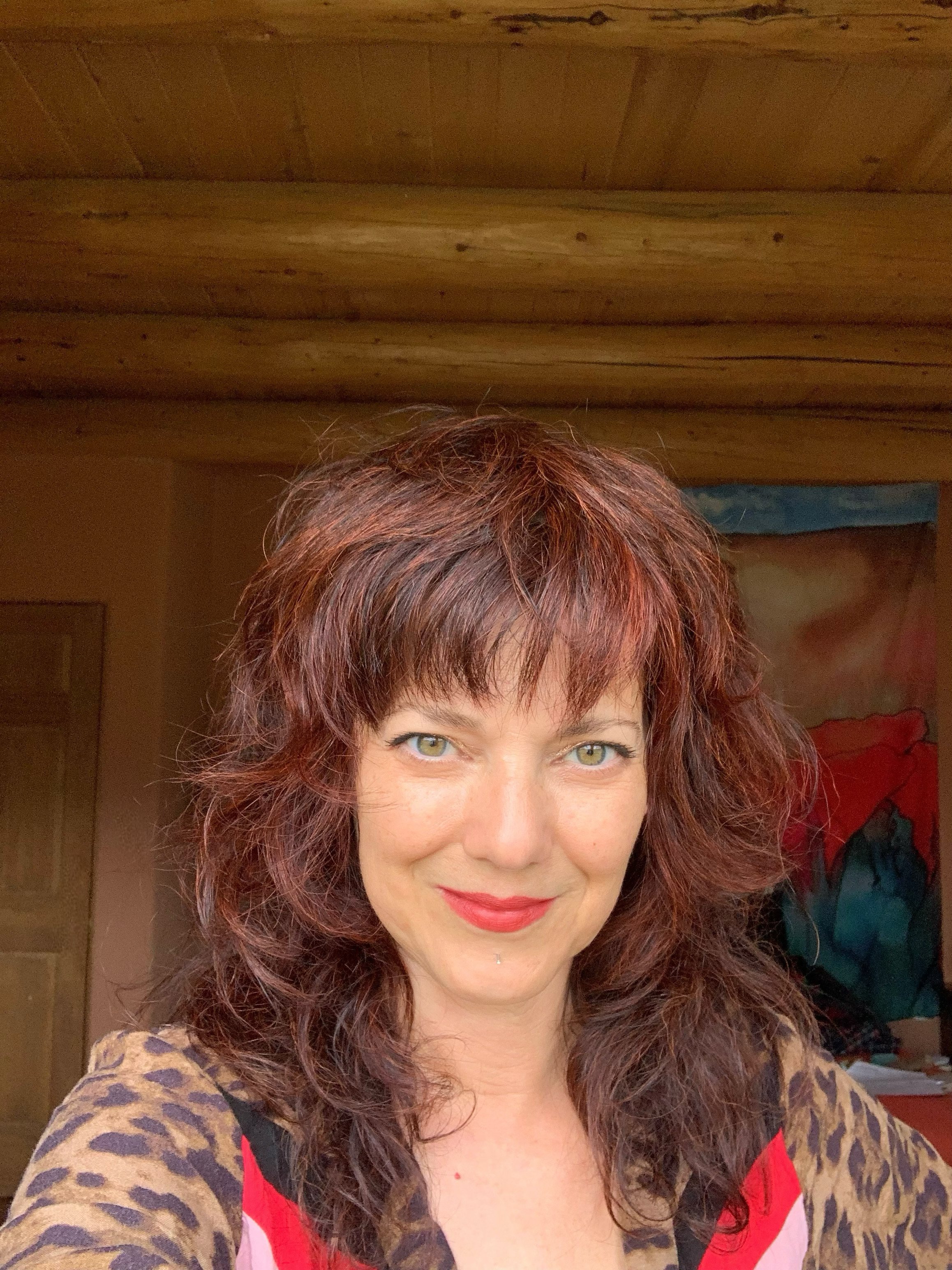
About Shankari
Shankari is a trauma-informed Somatic IFS Practitioner, Shamanic Parts Work™ Guide, and body-oriented coach. She helps spirit-rooted women meet protective patterns with compassion, reconnect with their inner healer, and create embodied change that holds in real life through Somatic IFS, Shamanic Parts Work™, and grounded spiritual practice.
New here? Start with 3 Free Audio Practices.