Episode 4 -Be the Voice You Want to Hear: Finding Inner Steadiness When Parts Are Loud
When your inner voice is harsh, panicked, or defeated—here's how to find the presence that can hold it all

Maybe you've felt it too.
That moment when you're trying to hold it together, trying to function, trying to show up—but inside, a part of you is whispering: "I can't do this. What's the point? I should give up."
Or maybe it's louder than a whisper. Maybe it's a voice that says: "If I'm visible, I'll be harmed. If I matter, I'll be destroyed."
If you've heard that voice, I want you to know: You're not broken. And you're not alone.
Understanding Collective Exhaustion
There's been a lot of collective intensity lately. A kind of tired that isn't just personal—it's woven into the fabric of our shared experience.
A lot of nervous systems are carrying what I call a "hangover" from what's been happening on the world stage.
Your body keeps scanning for danger even when you're just trying to make breakfast or answer an email. You collapse into doom-scrolling even when you know it's not helping. You feel unsteady even when nothing immediate is happening.
This isn't weakness. This is your nervous system responding to the environment.
The Journey Through Grief and Self-Doubt
A few weeks after I launched this podcast, I was sitting at breakfast with a friend by the ocean.
We were speaking in the language of parts—that Internal Family Systems way of naming what's moving inside us without shame or judgment.
I shared what had been happening for me: grief from losing three family members in six months. Depression that had settled in like fog. And underneath it all, protector parts whispering: "Who do you think you are? Don't put yourself out there. If you're visible, you'll be killed."
This wasn't metaphor. It was a visceral, childhood belief: Visibility equals danger. Being seen equals ceasing to exist.
And there I was, launching a podcast. Putting myself out there. Asking to be visible.
My system was collapsing under the weight of it all.
"I Need to Be the Voice I Want to Hear"
But then something happened.
In the middle of speaking—after letting these parts be seen, heard, and validated—a sentence arrived.
Not as a pep talk. Not as a strategy. But as a truth rising up from within.
"I need to be the voice I want to hear."
It landed in my body like a north star I could follow.
I felt my spine straighten. Something in me sat up. Clarity returned to the center of my body.
Not because the grief disappeared. Not because the fear vanished. But because Self-energy took the wheel.
Embracing Your Protectors

In IFS, we say we have parts—protectors and exiles—and then we have Self.
Self is not a part. It's the deeper presence within you. The place of clarity, compassion, connectedness, calm, and courage.
And here's what I want you to really hear: Your protectors are not the enemy.
That collapsing part? It's trying to protect you from overwhelm.
That doom-scrolling trance? It's trying to numb the intensity.
That self-doubt? It's trying to protect you from disappointment, from the heartbreak of "Maybe I don't matter."
That visibility-danger protector? It's trying to protect you from annihilation, from ceasing to exist.
When we fight our protectors, they don't relax. They get louder.
When we make space for them, when we listen, something else becomes possible.
The Importance of Awareness
You don't have to fix your feelings to shift your seat of awareness.
You don't have to become positive. You don't have to "get over it." You don't have to force calm.
You can let grief be here and still orient to presence.
You can let fear be here and still allow Self to lead.
This is the shift from ego identification ("I am this despair, I am this fear, I am this doubt") to awake awareness ("I am the one who can notice the despair and be with it").
And when you're in Self-energy, something natural unfolds: clarity, compassion, connectedness, freedom.
Not as a performance. But as your true nature.
A Practice for Meeting Your Parts
Here's a simple practice you can try right now:
Find a comfortable seat. Notice your feet on the ground, your body supported.
Bring to mind a part that's been activated. Maybe it's the collapsing part. Maybe it's the doom-scrolling protector. Maybe it's the self-doubt. Just let one part come into view.
You don't need to go deep. Just notice: Where do you feel this part in your body? What does it want you to know?
Place a hand on your heart. Take three breaths.
Say softly: "I'm here. I'm listening. You're not alone."
That's it. You're not fixing anything. You're just offering presence.
In times of uncertainty, being the voice we want to hear is a radical act of self-love and acceptance.
By embracing our emotions and acknowledging the collective struggles we face, we can cultivate a deeper sense of connection and compassion within ourselves.
Remember: You are not alone in this journey.
Listen to the Full Episode
Ready to dive deeper into this practice?
Listen to Episode 4: "Be the Voice You Want to Hear" on Apple Podcasts | Spotify or search @wildwisdomguide on YouTube.
Want a steady, guided container for this work?
Explore 1:1 Somatic IFS Sacred Journey work with me.
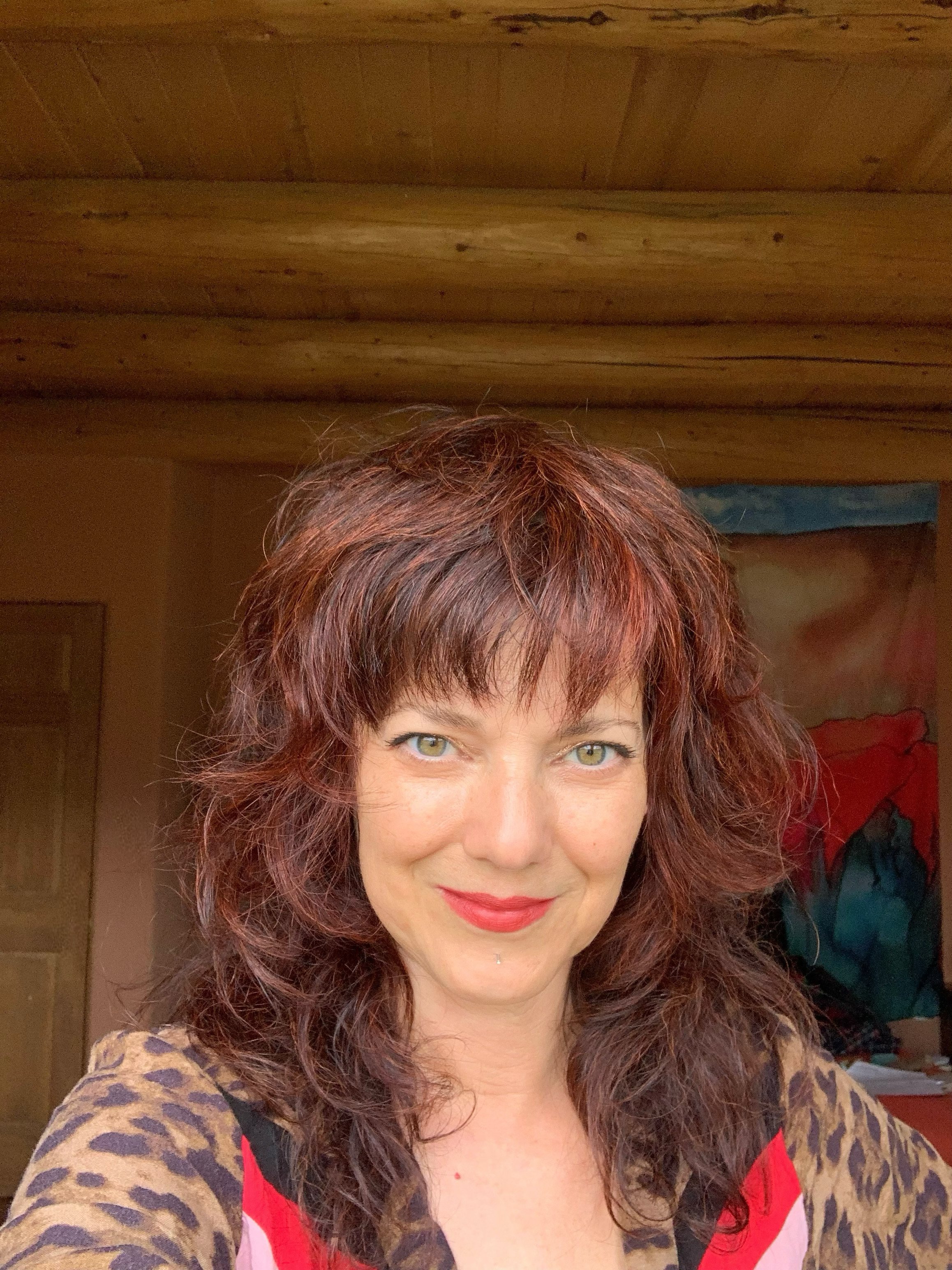
About Shankari
Shankari is a trauma-informed Somatic IFS Practitioner, Shamanic Parts Work™ Guide, and body-oriented coach. She helps spirit-rooted women meet protective patterns with compassion, reconnect with their inner healer, and create embodied change that holds in real life through Somatic IFS, Shamanic Parts Work™, and grounded spiritual practice.
New here? Start with 3 Free Audio Practices.