Episode 11: Trust the Page - Morning Pages as a Portal for Parts Work
When the Page Feels Like the Only Safe Place

Many of us come to writing in seasons of upheaval — a relationship shifting, a career dissolving, an identity quietly cracking open. We reach for the journal not because we're writers, but because we're full of something and we don't quite know what.
If that's you, you're not alone. And you're not broken.
There's something profound that happens when you stop trying to figure yourself out in your head and instead let your hand move across a page. The thinking mind slows. The body begins to exhale. And sometimes — if you stay with it long enough — something deeper than your ordinary voice begins to speak.
In IFS, we call those voices parts. And the page, it turns out, can be one of the most natural, accessible places to hear them.
What Morning Pages Actually Are
(and What They're Not)
Julia Cameron introduced Morning Pages in The Artist's Way as a daily practice of writing three longhand pages — stream of consciousness, first thing in the morning, before the day gets its hands on you.
The rules are beautifully simple:
Write by hand (there's something about the physical act that matters)
Don't read what you write, at least at first
Don't edit, censor, or perform
Just write
What they're not is a to-do list. They're not a gratitude journal. They're not even really a diary. Morning Pages are more like psychic drainage — a way of clearing the surface chatter so something more essential can emerge.
Some mornings it's pure noise — complaints about sleep, anxiety about the week ahead. And then, without warning, something real surfaces. A grief I didn't know I was carrying. A longing I'd been too busy to notice. A part of me that had been waiting, patiently, for a few minutes of uninterrupted air.
Bringing Your Parts to the Page
This is where Morning Pages and IFS meet in a way that feels almost destined.
In Internal Family Systems, we understand that we are not a single, unified self but a rich inner community — parts carrying old stories, protective strategies, buried wounds. The work of IFS isn't to fix or silence these parts, but to witness them, befriend them, and allow them to finally be heard.
And what does a part most need?
To communicate.

When you sit down with your pages and you feel that familiar tightening in your chest, or that whisper of I don't know what to write — that's not writer's block. That might be a part hovering at the threshold, wondering if it's safe to step forward.
You can try this invitation: instead of writing at your experience, write from it. Let the part that's present take the pen. You might ask:
"What do you want me to know right now?""What have you been trying to say that I haven't had time to hear?"
Then — and this is the tender part — trust what comes. Even if it's messy. Even if it's angry. Even if it doesn't make sense yet.
The Part That Fears the Page
I want to speak to something that comes up for almost everyone when they begin this practice: the part that doesn't want to write.
Maybe it says this is self-indulgent. Maybe it says I don't have time. Maybe it says what's the point, nothing will change.
In IFS, we'd get curious about that part rather than trying to push past it. What is it protecting you from? What does it fear might happen if you actually slowed down and listened to yourself?
For many helpers — therapists, coaches, healers — there's a part that has learned to be an exquisite witness to everyone else while quietly neglecting the same quality of presence for themselves.
The page is an invitation to turn that witness gaze inward. Not as a project. Not to produce anything useful. Just to be with yourself, the way you'd be with a client you deeply care for.
You are allowed to be witnessed too.
When the Pages Bring Up Something Heavy
Sometimes what surfaces in morning writing isn't gentle. Grief rises. Old wounds open. A part arrives with real weight.
If that happens, I want you to know:
You don't have to go it alone. The page is a starting place, not the whole journey.
Some gentle options when things feel tender:
Write to the part rather than as it — create a little distance by addressing it like a letter
Notice where you feel it in your body and simply name that sensation
Place a hand on your heart and let yourself know: I see you
Step away from the pages and return to your body — a walk, some water, a breath
The practice is meant to support you, not overwhelm you. You get to set the pace. You get to close the notebook.
Key Takeaways
Morning Pages are a portal, not a performance. Three unedited pages, longhand, before the day begins — no rules beyond that.
Parts speak through writing. When you stop editing yourself, the voices that most need to be heard often find their way to the surface.
Curiosity is the posture. Instead of analyzing what arises, practice noticing it with warmth.
The page can hold a lot — but it doesn't have to hold everything. Know when to step back and reach for more support.
You are worthy of the same tender witness you offer others. This practice is one small, daily way of remembering that.
Listen to the Full Episode
If this resonated, come sit with the full conversation. In Episode 11, I go deeper into how to work with specific parts that show up in your writing, what to do when the pages feel dry or forced, and how to use this practice as a gentle, ongoing form of self-tending.
A Gentle Invitation
If you find that what surfaces in your pages is asking for more than the page can hold — if there's a part of you longing to go deeper, to work with these inner landscapes in a more supported way — I offer one-to-one Sacred Journey sessions rooted in Somatic IFS and Shamanic Parts Work™.
This isn't therapy. It's a guided, body-centred, soul-informed journey into your own inner world — at your pace, with your parts leading.
If you feel a quiet pull toward that kind of work, you're warmly welcome to reach out. No pressure. Just an open door.
With care,
Shankari
Wild Wisdom Guide
About Shankari
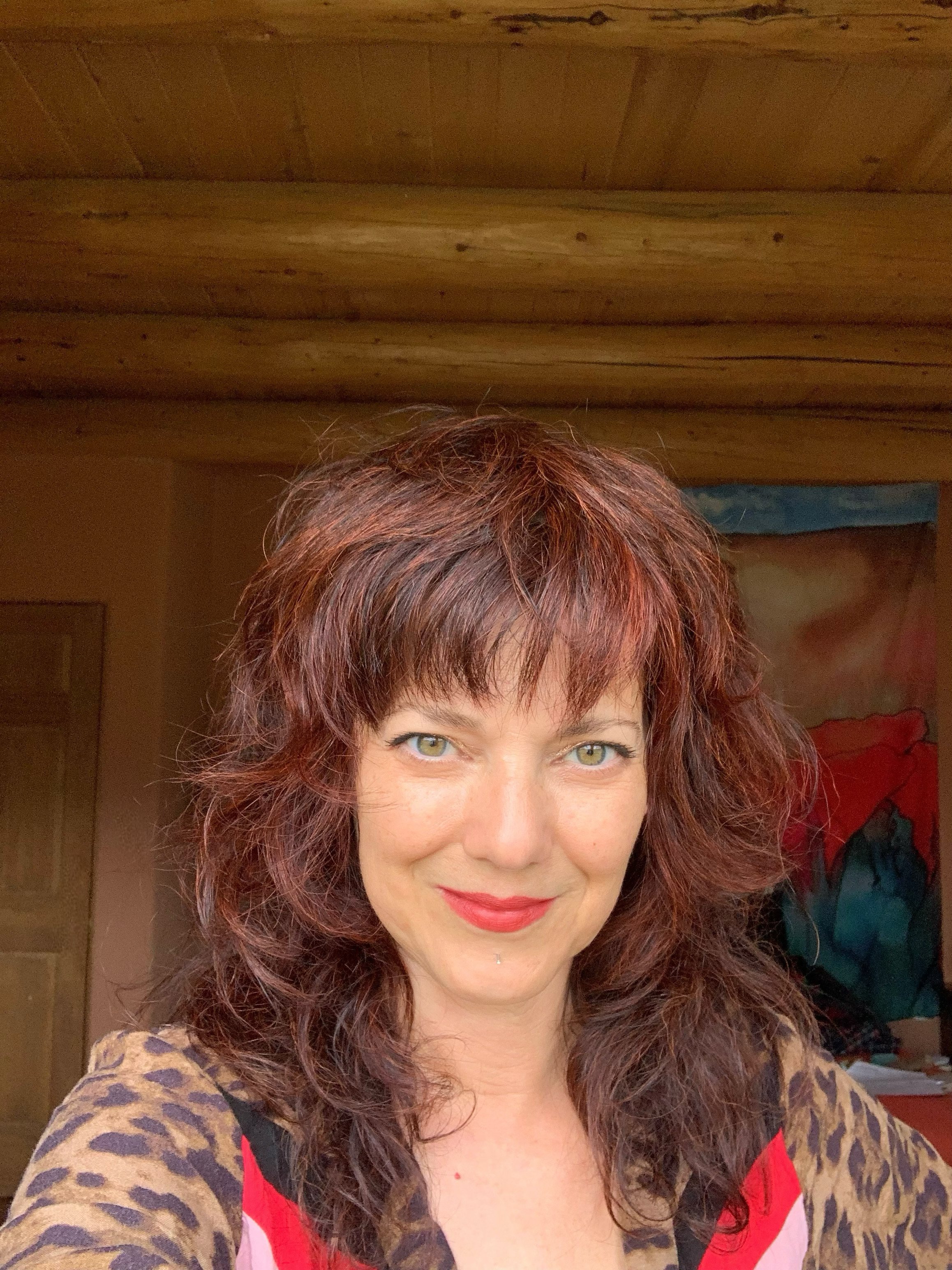
Shankari is a trauma-informed Somatic IFS Practitioner, Shamanic Parts Work™ Guide, and body-oriented coach. She helps spirit-rooted women meet protective patterns with compassion, reconnect with their inner healer, and create embodied change that holds in real life through Somatic IFS, Shamanic Parts Work™, and grounded spiritual practice.
New here? Start with 3 Free Audio Practices.